Triply Cookware
Triply vs Non-Stick Cookware: An Honest Comparison
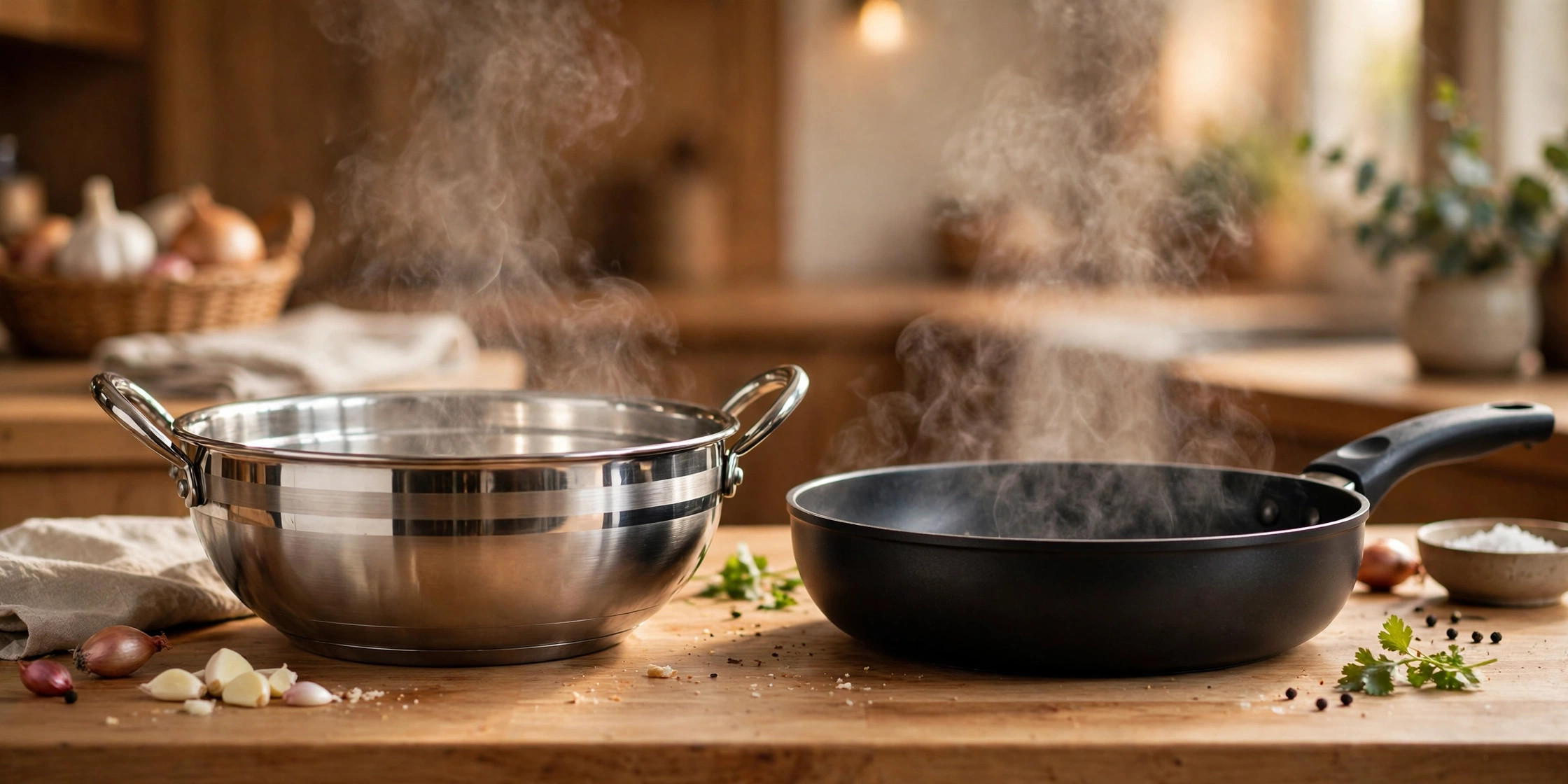
The cookware debate that never ends - settled with facts instead of marketing. Here is how triply and non-stick actually compare across the dimensions that matter.
Health
Triply: bare stainless cooking surface - no coating to degrade, no PTFE/PFOA concerns, safe at any temperature. Non-stick: modern PFOA-free coatings are safe when used correctly, but overheating empty pans and scratched coatings remain concerns. Winner: triply, clearly.
Durability
Triply: lasts decades - metal utensils, high heat, dishwashers, all fine. Non-stick: coating degrades in 1-3 years of regular use, then it is landfill. Winner: triply, by a mile.
Cooking performance
Non-stick wins for eggs, dosa and delicate fish - nothing sticks. Triply wins for searing, tadka, deglazing and anything needing real heat - it takes temperatures non-stick can’t. Different strengths; a complete kitchen has both.
Cost over 10 years
A ₹3,000 non-stick pan replaced 4 times in a decade = ₹12,000. A ₹5,000 triply kadhai bought once = ₹5,000 - and still going. Triply is cheaper per year of use in almost every comparison.
The verdict
Buy triply for your workhorses (kadhai, saucepans, daily cooking) and keep one good non-stick for eggs and dosa. That combination beats either alone.
Frequently asked questions
Is triply better than non-stick?
For health, durability and high-heat cooking - yes. Non-stick still wins for delicate foods like eggs. Most kitchens benefit from both.
Does food stick to triply cookware?
Only if misused. Preheat properly, add oil to hot steel, and food releases cleanly - technique, not coating.
Have a cookware project in mind?
We manufacture triply cookware and supply tri-ply circles for OEM, private label and distribution. Tell us your specs - we reply with a quote.